
Corporate Retreat vs. Team Building Event: What Is the Difference?
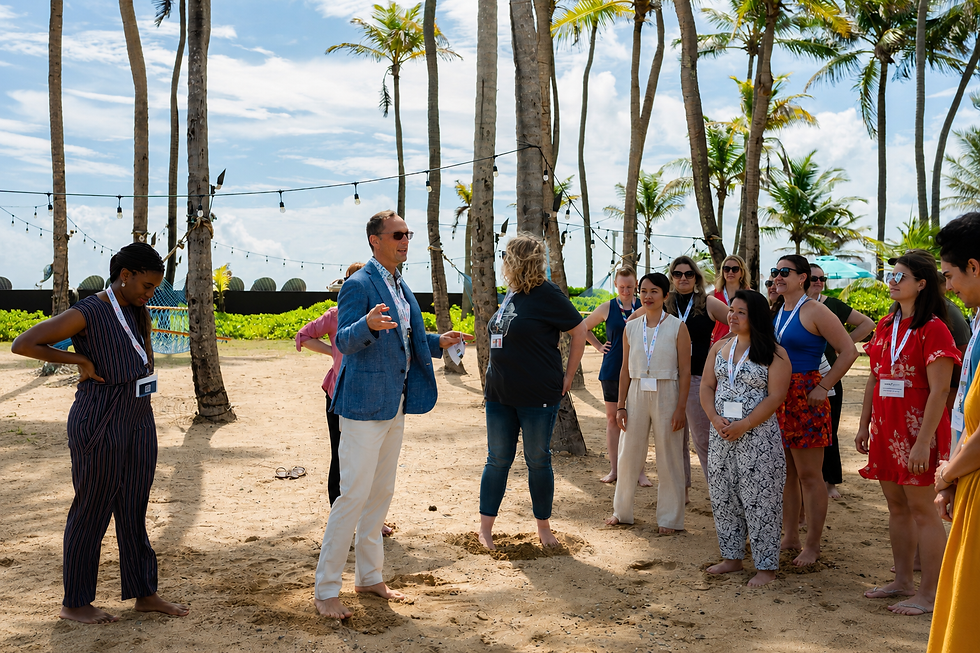
If you search for options to bring your leadership team together, you will encounter two terms used almost interchangeably: corporate retreat and team building event. They are not the same thing. The distinction is not semantic. It determines the quality of outcomes your organization can expect, the investment required to achieve them, and whether the experience produces measurable behavioral change or a memorable afternoon that fades within two weeks.
Many organizations book one expecting the other. An HR director books a team building event hoping it will resolve the communication breakdown that has been dragging down leadership team performance for eighteen months. A CEO books a corporate retreat hoping it will produce the strategic clarity the organization has been missing, but structures it like a day of activities with a dinner at the end. Understanding precisely what each type of experience is designed to produce, and where a third category, the leadership development retreat, outperforms both, is the starting point for making a smart decision about what your organization actually needs.
What Is a Corporate Retreat?
A corporate retreat is a multi-day offsite experience designed to remove a leadership team or a specific organizational group from their daily operational environment and create conditions for a different quality of work. It is typically organized around strategic objectives: planning a new direction, resolving long-standing team dynamics, designing organizational changes, or creating alignment around priorities that the pace of daily operations prevents from being addressed properly.
Corporate retreats typically range from two to five days. They include a mix of structured working sessions, facilitated discussions, and unstructured time for reflection and informal connection. The best corporate retreats produce specific, documented outcomes: decisions made, commitments recorded, and behavioral agreements established. They are evaluated not by participant enjoyment but by whether the organization is functioning differently in the sixty to ninety days that follow.
Corporate retreats require skilled facilitation to produce their full value. Without a neutral third party managing the process, group dynamics, positional authority, and the informal power structures that exist in every leadership team tend to reproduce the same patterns that created the need for the retreat in the first place.
What Is a Team Building Event?
A team building event is a shorter, typically single-day or half-day experience designed primarily to strengthen interpersonal connections, build morale, and create shared positive experience among team members. It is organized around activities rather than outcomes. The goal is engagement, fun, and a sense of connection that carries positive energy back into the workplace.
Team building events include things like escape rooms, cooking challenges, outdoor adventure activities, volunteer service days, and facilitated group games. They are most effective for teams that are already functioning reasonably well and benefit from a boost of energy and connection. They are not designed to address structural communication breakdowns, resolve significant trust damage, or produce strategic clarity. A team building event that attempts to do those things will be overextended and underwhelming.
The investment in a team building event is typically lower than a corporate retreat, reflecting its more limited scope and shorter duration. The cost per hour of meaningful outcome is often higher, however, because the outcomes themselves are less strategically significant and more difficult to measure.
What Is a Leadership Development Retreat?
This is the third category that is frequently missing from the conversation, and it is the one that most organizations actually need when they sense that something more than a team activity but different from a strategic planning session is required.
A leadership development retreat is organized around the behavioral development of the leaders themselves. It is not primarily about making strategic decisions, though strategic clarity often emerges. And it is not primarily about team bonding activities, though connection deepens significantly. It is about developing the specific leadership capacities that determine how the team functions: communication quality, emotional intelligence, capacity for honest feedback, resilience under pressure, and the ability to navigate conflict productively.
Leadership development retreats typically run two to four days. They involve facilitated self-assessment, structured practice of specific leadership competencies, and the kind of honest group reflection that requires time, safety, and skilled facilitation to develop. The outcomes are behavioral: leaders communicate differently, make decisions differently, and relate to each other differently in the weeks and months that follow. For more on what distinguishes retreats that actually produce behavioral change, the distinction from events and standard meetings is significant.
A Direct Comparison: Three Categories Side by Side
Duration
A team building event typically runs four to eight hours. A corporate retreat runs two to five days. A leadership development retreat runs two to four days, with the longer duration allocated to the depth of facilitated work rather than to the volume of strategic content.
Primary Purpose
A team building event is designed to create positive shared experience and boost team morale. A corporate retreat is designed to produce specific strategic decisions and organizational commitments. A leadership development retreat is designed to produce behavioral change in the leaders who attend.
Facilitation Requirements
A team building event can be successfully run by an activities coordinator or internal HR team. A corporate retreat benefits significantly from external facilitation, particularly when complex team dynamics are present. A leadership development retreat requires skilled external facilitation with specific expertise in organizational behavior, coaching, and leadership psychology.
Depth of Engagement
A team building event engages participants at the surface: shared activity, laughter, light competition, and the social bonding that comes from a shared positive experience. A corporate retreat engages participants at a medium depth: strategic thinking, collective decision-making, and structured reflection on organizational direction. A leadership development retreat engages at the deepest level: honest self-assessment, interpersonal vulnerability, and the kind of real-time practice that produces lasting behavioral change.
Cost Per Meaningful Outcome
Team building events are typically the lowest investment in absolute terms and in strategic return per dollar. Corporate retreats are a higher investment with a higher and more measurable strategic return. Leadership development retreats represent the highest investment in participant development per dollar, with returns that compound over time as leaders apply their developed capacities to every decision and interaction for years following the retreat. The article on measuring the ROI of leadership offsites offers a useful framework for quantifying these differences.
How to Decide What Your Organization Actually Needs
You Need a Team Building Event If...
Your team's baseline functioning is healthy, interpersonal relationships are generally positive, and the primary need is an energy boost and a reminder that work is shared by people who enjoy each other. Team building events work well as an appreciation gesture, a morale investment during a particularly demanding period, or a welcome experience for a newly formed team that needs to build initial connection quickly.
You Need a Corporate Retreat If...
Your organization faces strategic decisions that require the full leadership team's sustained attention, alignment, and commitment. You are heading into a planning cycle, a significant organizational change, a leadership transition, or a market shift that requires collective strategic thinking. The outcome is a set of organizational decisions that the leadership team will execute together in the months that follow.
You Need a Leadership Development Retreat If...
The quality of leadership behavior itself is the limiting factor in your organization's performance. Team dynamics are producing recurring conflict, communication breakdowns, or trust erosion that no strategic decision resolves. Leaders are not growing at the pace the organization requires. Senior leaders are showing signs of burnout, disconnection, or operating in patterns that are undermining team health. For more on what leadership development retreats look like in practice and the outcomes they produce, the distinction from standard team events is clarifying.
The Hybrid Option: Combining Elements Effectively
The best retreat designs often integrate elements of all three categories in appropriate proportions. A corporate retreat that includes a leadership development component produces decisions that are more likely to be executed well because the people executing them have developed their capacity. A leadership development retreat that includes strategic reflection produces behavioral change that is immediately applicable to real organizational challenges.
The key is sequencing. Development work typically needs to precede strategic work, not follow it. Leaders who have spent time doing honest self-assessment, practicing communication skills, and developing the capacity for genuine engagement with each other bring a different quality of thinking to strategic sessions than leaders who have spent the preceding days in presentation-heavy content sessions.
Team building activities, placed at strategic points in a longer retreat, serve as genuine connective tissue between more intensive facilitated work. A morning outdoor activity before an afternoon of challenging interpersonal work creates the relational warmth that makes the harder work more productive.
What to Look for When Choosing a Retreat Facilitator
Regardless of which format your organization selects, the quality of the facilitator is the single highest-leverage variable in retreat outcome. A great venue and a poor facilitator will produce a mediocre retreat. A skilled facilitator in a modest setting will produce outcomes that exceed what a luxury property with a generic facilitator could deliver.
For corporate retreats, look for facilitators with specific experience in organizational dynamics and strategic decision-making processes. They should be able to demonstrate how they structure decision-making conversations, how they manage dissent within senior teams, and how they ensure commitments are captured and assigned before the retreat ends.
For leadership development retreats, the requirements are more demanding. Facilitators should have formal training in coaching, organizational behavior, or psychological frameworks relevant to leadership development. Certifications in specific methodologies, including somatic practices, mindfulness-based leadership, or evidence-based communication frameworks, are meaningful indicators of depth rather than general facilitation skill. Experience count matters: a facilitator who has guided hundreds of leadership retreats brings pattern recognition and adaptability that a less experienced facilitator cannot replicate.
For culture reset retreats, facilitators must be specifically skilled in holding emotionally complex group dynamics without rescuing or avoiding the difficult material. This is a distinct competency that not all experienced facilitators possess. Ask directly about their experience with post-disruption culture work and how they navigate situations where trust has been seriously damaged.
The investment in finding the right facilitator for your specific retreat format and organizational context is among the highest-ROI decisions in the entire planning process. The format creates the container. The facilitator determines what happens inside it.
Frequently Asked Questions About Corporate Retreat vs. Team Building Events
What is the main difference between a corporate retreat and a team building event?
A corporate retreat is a multi-day offsite organized around strategic decisions and organizational commitments. A team building event is a shorter experience organized around morale, connection, and shared positive experience. A corporate retreat produces documented outcomes. A team building event produces shared energy and relational warmth.
Which is better for addressing communication problems in a leadership team?
Neither a team building event nor a standard corporate retreat is designed to address structural communication problems. A leadership development retreat, with skilled facilitation focused on communication skills and interpersonal dynamics, is the appropriate format for this purpose.
How much should an organization invest in a corporate retreat?
Investment varies significantly based on team size, duration, facilitation quality, and venue. The more relevant question is the investment relative to what the retreat is designed to produce. A leadership team retreat that produces strategic clarity worth millions in execution efficiency is not expensive at any budget. A team building event that produces nothing measurable is expensive at any budget.
Can team building activities be included in a corporate retreat?
Yes, and when sequenced thoughtfully, they significantly improve the quality of the more intensive facilitated work. Team building elements create relational warmth and shared positive experience that make honest, challenging leadership development conversations more productive.
How do we measure whether a corporate retreat produced value?
Define the specific outcomes the retreat is designed to produce before it begins. After the retreat, measure whether those outcomes were achieved and whether the decisions or commitments made at the retreat held in the sixty to ninety days that followed. Behavioral change in individual leaders can be assessed through follow-up 360-degree feedback or structured peer observations.
Why Casa Alternavida: Your Ideal Corporate Retreat Center
Casa Alternavida is a nature-based executive retreat center set between El Yunque National Rainforest and the warm turquoise ocean, 30 minutes from Luis Munoz Marin International Airport in San Juan. It is purpose-built for the kind of leadership development retreat that sits at the highest-value intersection of strategic work and behavioral development.
Led by CEO and facilitator Yancy Wright, with over 500 leadership retreats spanning corporate team building, strategic planning, and deep leadership development work, the team at Casa Alternavida brings the expertise to design experiences that are more than activities. Guests leave with measurably different leadership behavior and a team that functions at a level the previous version of itself could not have produced.
Call, email, or message us to explore what format is right for your team and how to design an experience that delivers exactly what your organization needs.
Comments